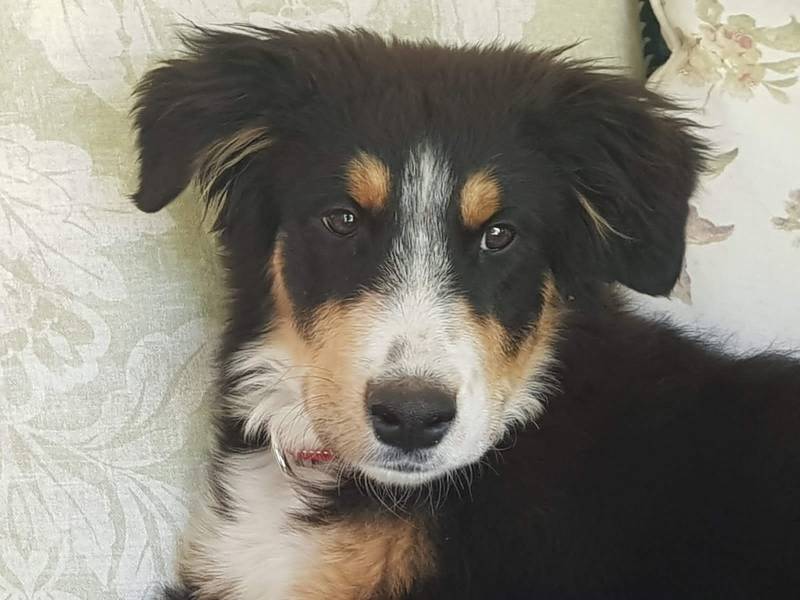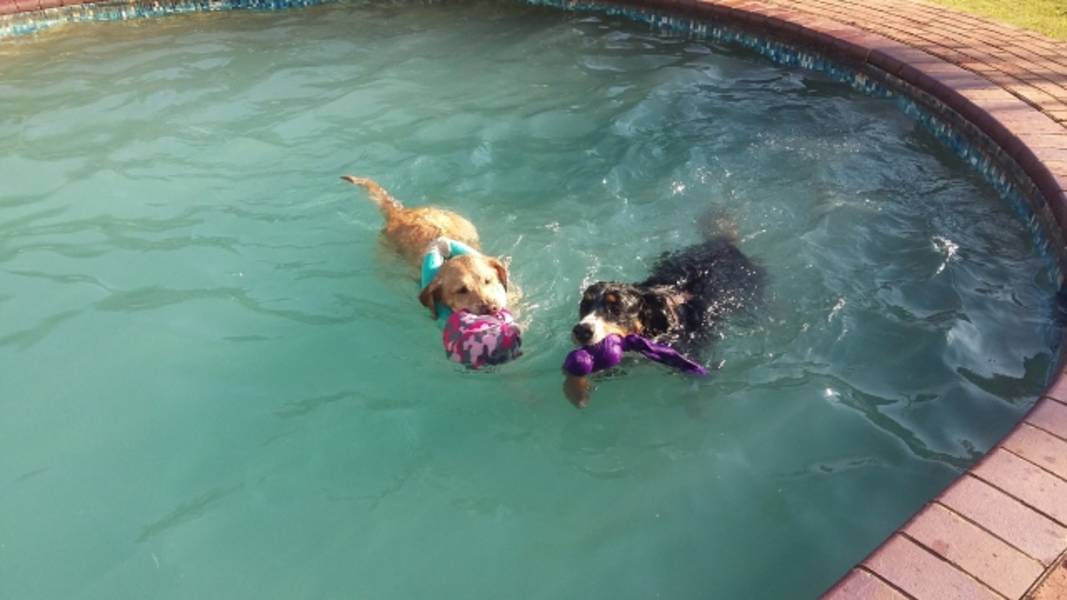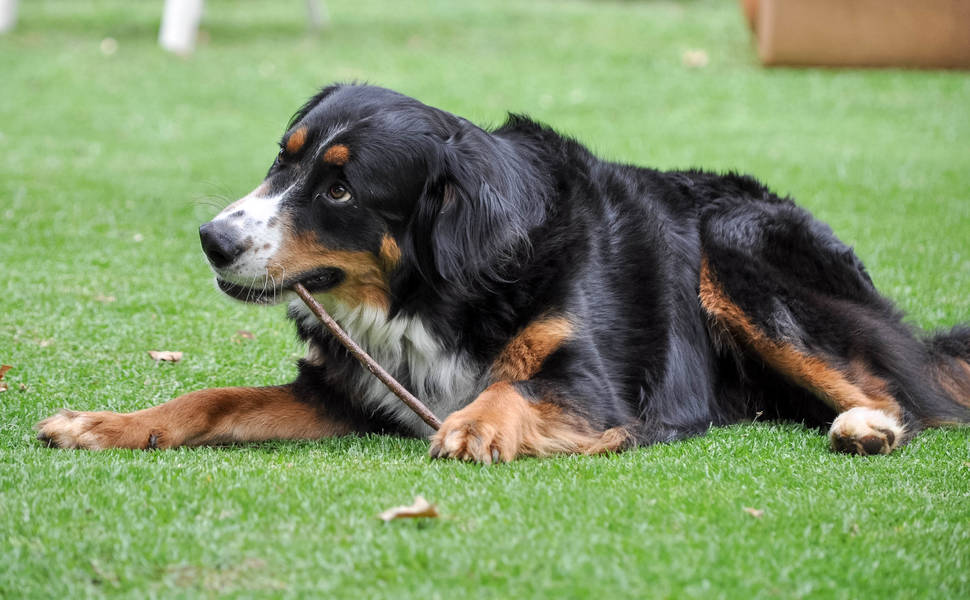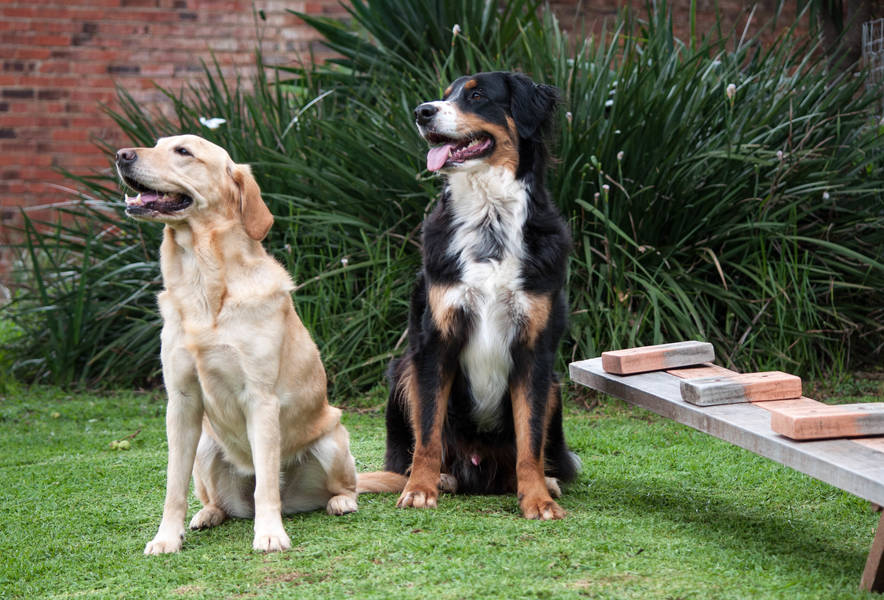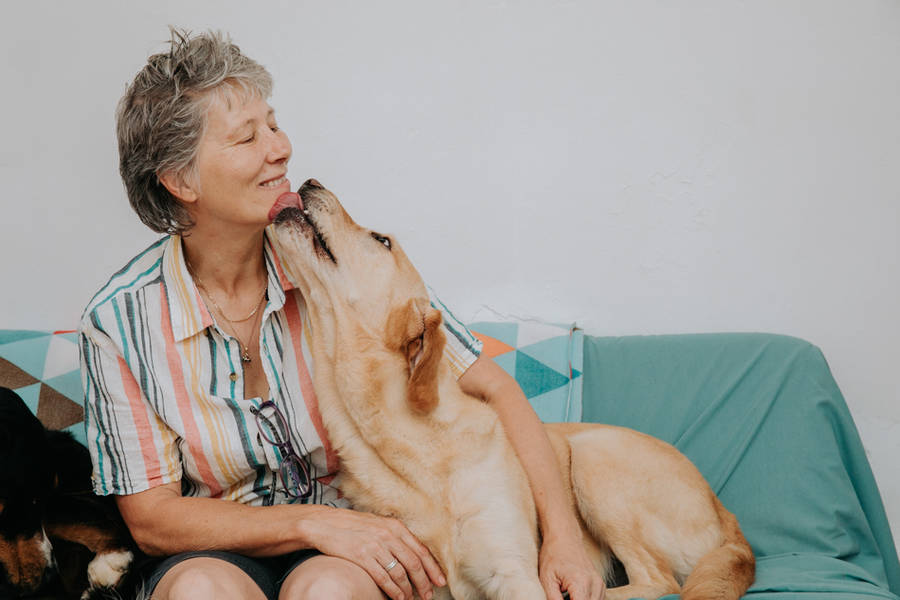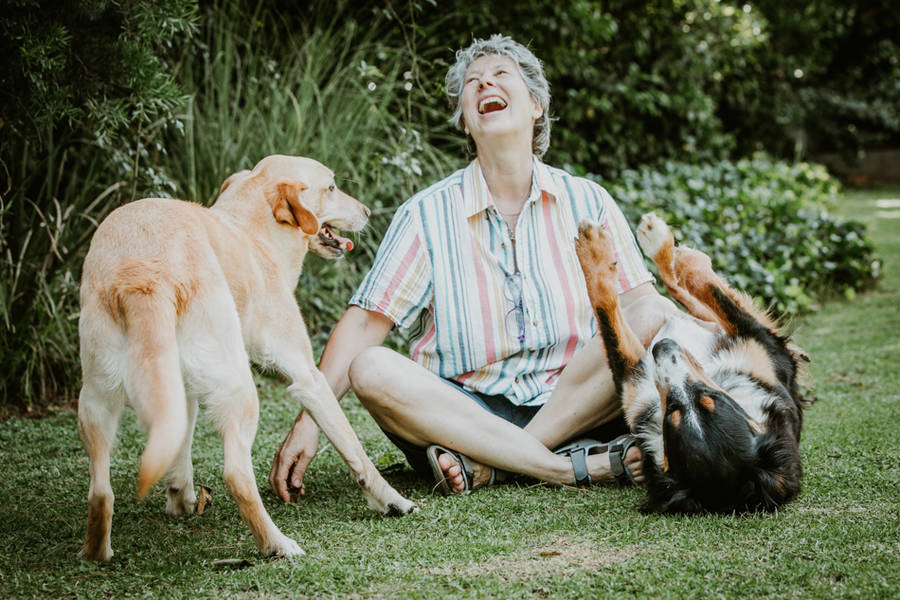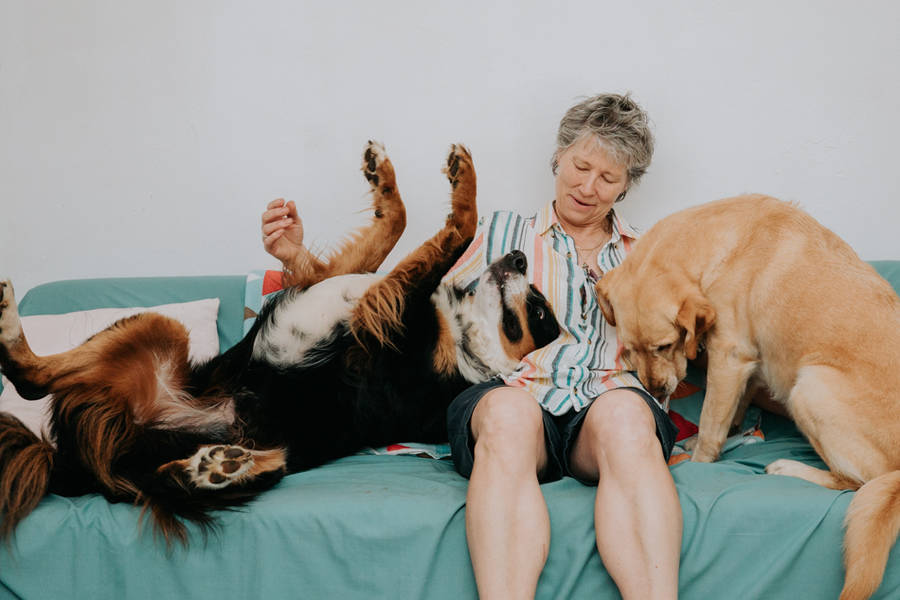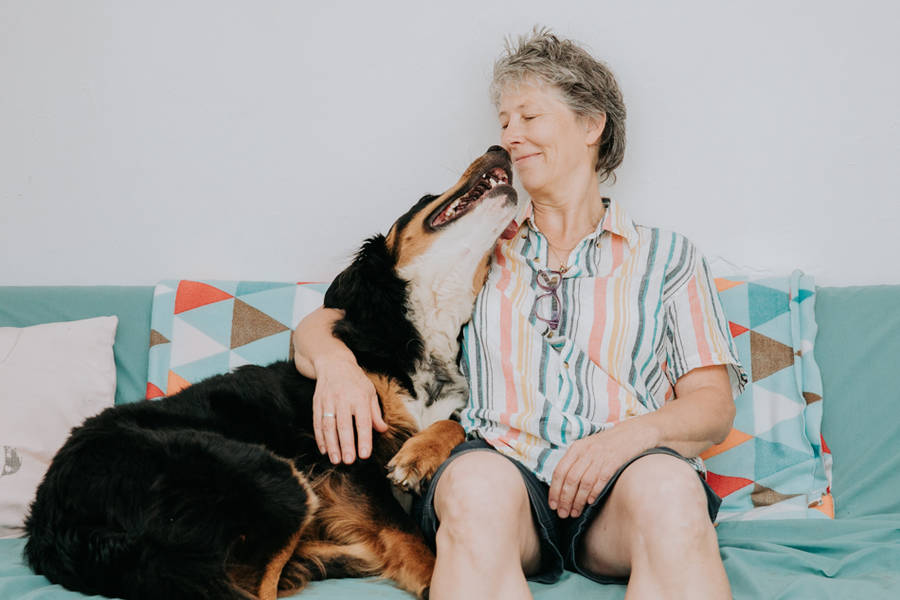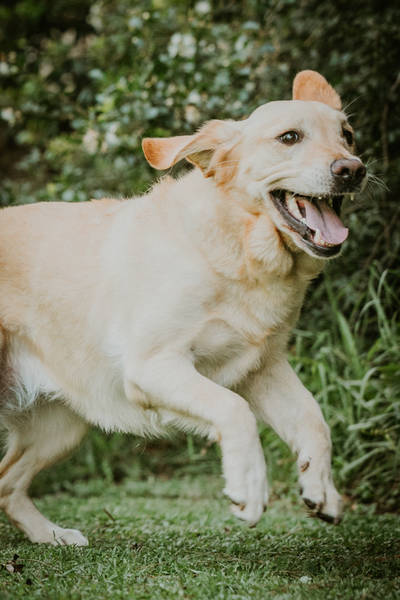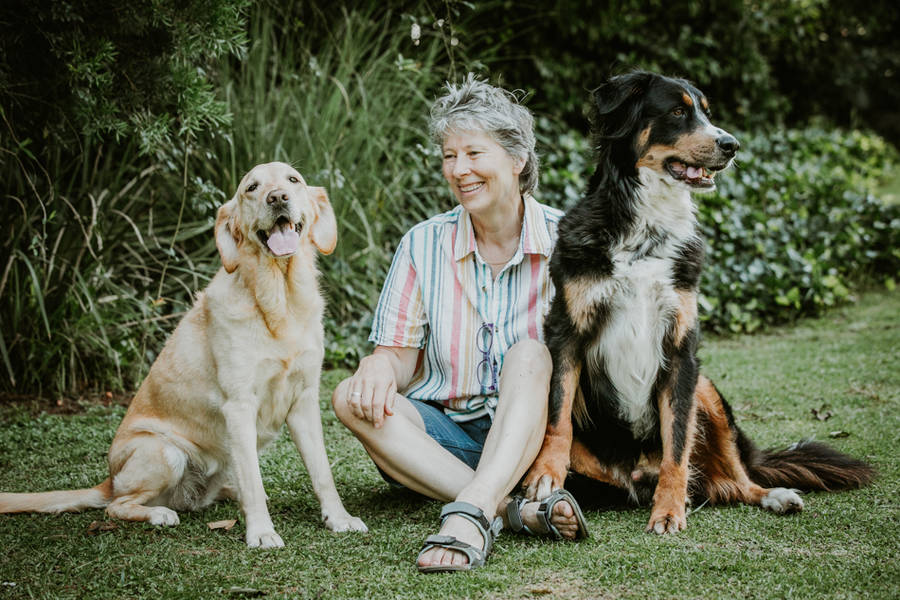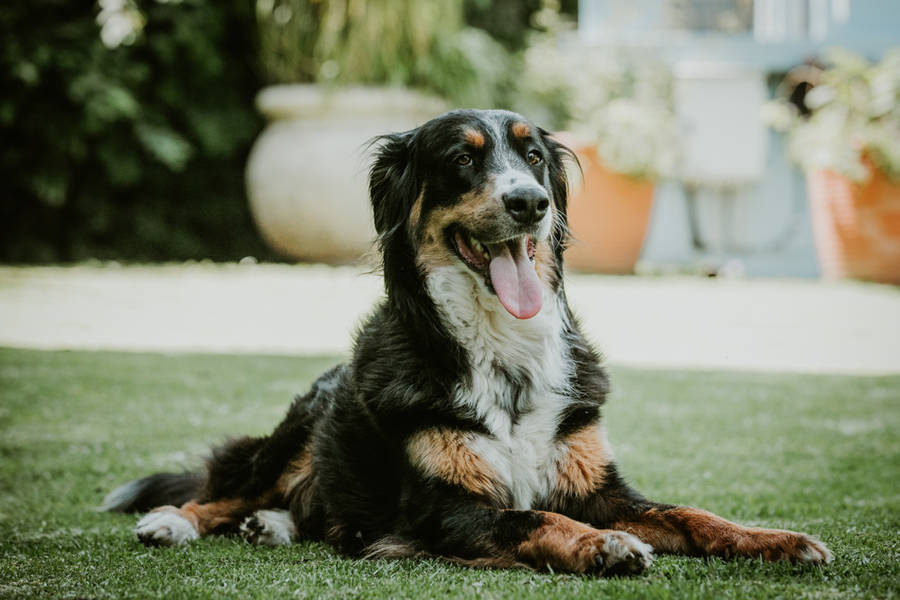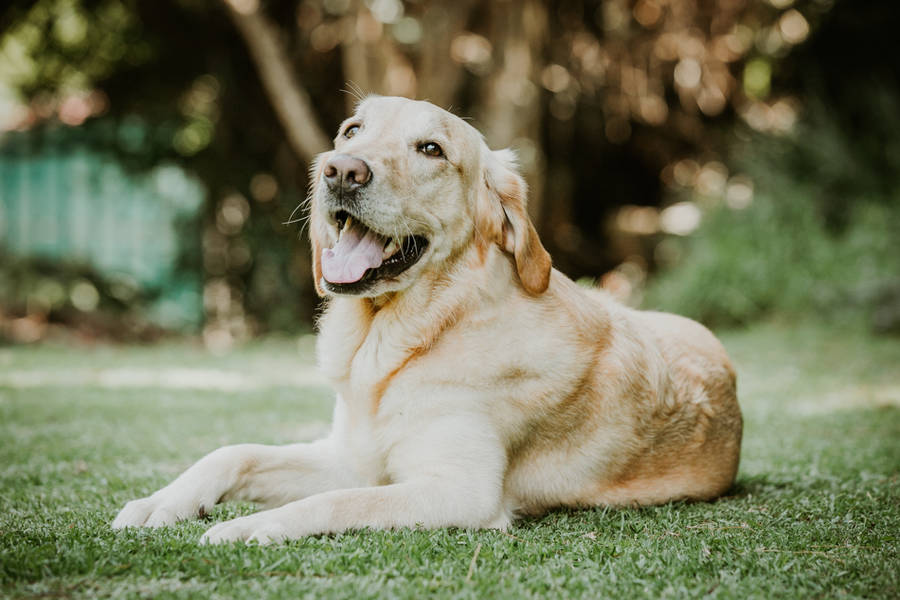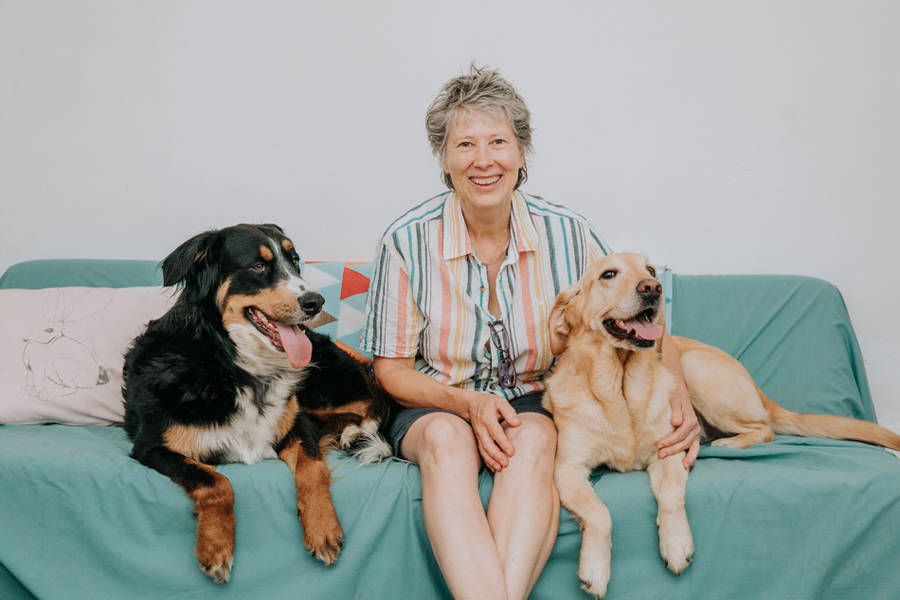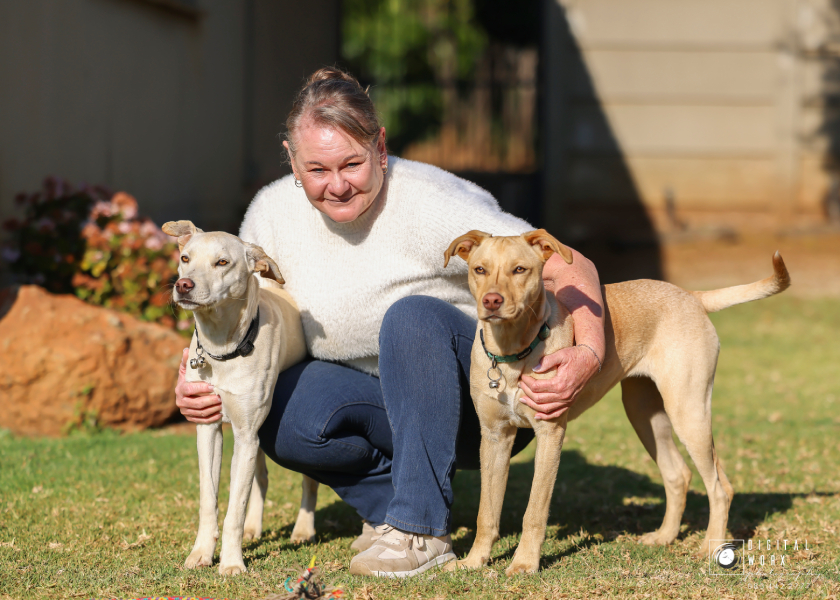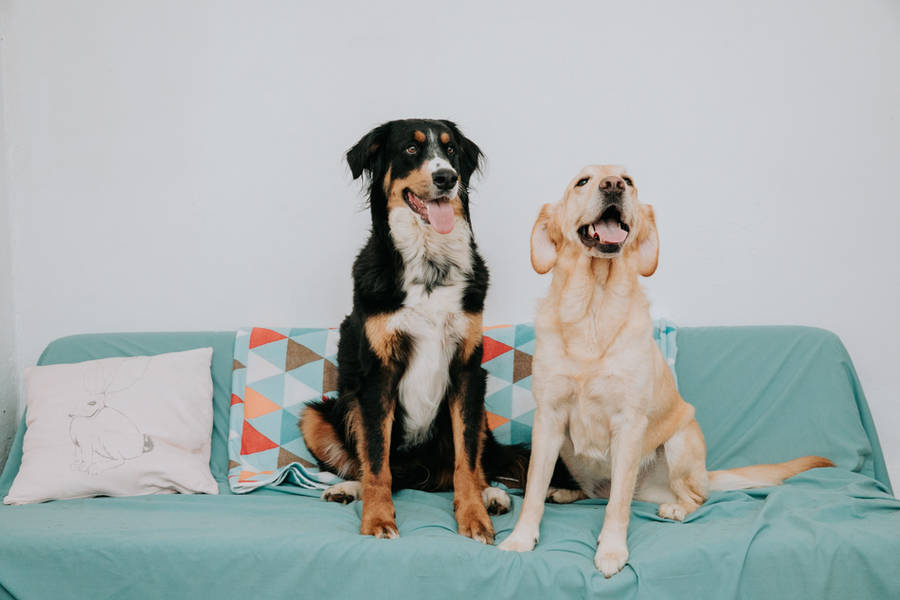
Whiskey (left) and Xindi
Written by Kristene Smuts
Professional photography by Karen Smit Photography and Strike a Pose Photography
Well, let’s start with Xindi, whose mom is a Labrador and dad an American Golden Retriever. We’d said goodbye to our Border Collie early in 2015, and shortly after that, our 20-year-old cat. We didn’t have any other animals at that stage to ease the hurt. We agreed to give it a gap before we decided on getting animals again.
In 2016, we adopted two cats from a shelter, arguing that cats could go with us to a smaller residence, which was a real possibility as we’re not that young anymore and had been discussing downscaling.
A very special pup
But life has a way of intervening in your plans, and in 2017 – still discussing downscaling – we decided that puppy raising for the South African Guide-Dogs Association for the Blind (GDA) would be the answer to having a dog (which I’d never been without for longer than a month or two) while not fully committing to actually having one for 15 years. What could go wrong? You have a puppy (yes, for puppy breath!) and you’re doing a good thing by changing somebody else’s life!
So, in September 2017, Xindi came along at seven weeks old. She was a delight! Of course, we had all the puppy things – “busy” in the middle of cold nights, training once a week at GDA in Paulshof, anxiety at having to take care of such a precious being… What if I was doing something wrong? Am I going to mess her up for the rest of her life? Should I have done things differently? Will she be placed, given everything I was doing wrong? And many more thoughts like this. It’s estimated that to train one guide dog costs over R100K to get them to the point of placing them with a person, so you can imagine my stress levels.
Xindi learns the ropes
I was determined to give her my best! She went with me to Bloemfontein to visit my mom in the retirement home, where they loved her to bits! The trip took over six hours because I stopped so often to let her out and give her a break. It was her first long journey, and it had to be enjoyable so that she didn’t have a problem with car travel with her person one day. We attended all the socialisation visits – malls, retirement homes, schools, events; anywhere to expose her to as much as possible. Remember, absolutely everything we did with her was focused on her future as a therapy dog, so we had to think and plan everything very carefully.
Part of the training/socialisation was to take her to parks where she could interact with other dogs safely; controlled interaction being part of the training. I met some lovely people in the park where I used to go. Our best time was just as the gates opened (05h30 in summer, 06h00 in winter – yes, really!), so we could work on various things – sit-stay, loose-leash walking with distractions, etc. – and of course, making sure that she’s comfortable in all situations. Obstacles, yay! She trusted me implicitly, and if I asked her to jump up on a log, she didn’t hesitate; go through a fast-flowing stream, no problem; cross a wonky footbridge, piece of cake! She knew I’d never ask her to do something that was out of her comfort zone or that she was unable to do or was dangerous.
A traumatic attack
Then, in April 2018, we were returning to the car after our training session, on-leash so that she didn’t rush into the parking area with moving cars and strange dogs, when two men entered with their two off-leash dogs, one a Rottweiler, the other a Staffie-type. They’re off-leash, so they’re safe, right? (So I thought.) Being the ambassador for GDA, I was answering one man’s questions about Xindi’s training and her purpose when I heard the most awful scream behind me.
The Rottweiler was attacking Xindi and shaking her by the back leg. Xindi is submissive and would lie on her back when meeting strange dogs. In this case, it was an invitation for the Rottweiler to attack. I have no idea how I got Xindi away from him – I was in total shock for quite some time.
Although Xindi only had a few puncture holes on her tummy and leg, the bleeding wouldn’t stop. I rushed her to GDA’s vet, who treated her, but the bleeding seeped through the bandages within an hour, so back to the vet (30km from home) we went. The skin on her tummy had been ripped from the underlying muscle and she was ordered to rest for four to six weeks, with minimal exercise in the first two weeks. Xindi recovered well mentally and physically, but I carry the sound and image of that day with me and will probably do so forever.
Our sunshine dog
Xindi was taken into training and, unlike so many other first-time puppy raisers, I was overjoyed. Yes – THIS is what we’d been working towards. All my anxiety was for nothing – I didn’t mess her up. It was like she was in boarding school: I’d pick her up on Friday for the weekend and take her back to school on Monday.
There are basically three categories that GDA train for: guide dog, autism support, and mobility support. The dogs are carefully assessed to find where their talents are best suited, and for the first time, Xindi’s entire litter was marked for the two latter support jobs. I missed her terribly, but I was so happy that she was fulfilling her destiny and was looking forward to finding out if she was going to be an autism support dog or a mobility support dog.
Well, no (cue the movie sound of screeching brakes). I received a call one morning from GDA informing me that Xindi was being withdrawn due to her skin and ear condition. I was heartbroken – all that work, the sleepless nights, the trauma of the attack, the joy that she was in training… all for nothing. But I had the choice of keeping her, and, of course, I said yes! She was coming home permanently. It was quite an emotional adjustment because, for so long, I’d lived with the mantra, “She’s not yours; she’s destined for somebody else.” Now, that somebody else was me. She’d fulfilled her destiny.
Xindi has been such a joy and delight, our sunshine dog.
Welcoming Whiskey
Then came Whiskey. Well, not full time initially. He’d been found in the street by a friend as a stray of around six months old. Whiskey was in terrible condition. The poor dog was skin and bones, covered with ticks and riddled with worms. His new family worked all day, and Whiskey, being a young dog (and not too gentle on their patio furniture or garden), would come for play dates with Xindi twice a week.
I offered to take him to puppy school and, well, what a different dog to train! I had to change so many long-held beliefs about how to train dogs. Whiskey made sure I became more perceptive to his emotions and more aware of my and his body language. I had to check my moods 20 times a day, even wiping away a frown when I looked at him! He wasn’t an “easy” dog by any means – quite a shock coming so soon after Xindi being a breeze to train. However, Whiskey has made me a better trainer and carer, and I think that was his destiny all along – one he fulfils every day without fail.
Whiskey crept into our hearts with his lovable nature and constant vigilance to make sure he was doing everything right – he couldn’t stand doing the wrong thing. He started sleeping over one night, then two, and eventually he stayed. Serious discussions were had to make sure it was the right decision for Whiskey, but everybody agreed that he couldn’t be in a better home.
A distressing diagnosis
A few months after he came to stay, I noticed that he seemed kind of sore, kind of not. He’d sometimes have trouble getting up, but it was so slight and gradual that I couldn’t put my finger on it. I thought it was growing pains and kept an eye on him. But always listen to the little voice!
I took him to my vet for x-rays. The diagnosis: at two years old, he had hip and elbow dysplasia with early-onset arthritis, with the elbows being the worst. He needed elbow scopes (arthroscopy). I had to get the R18,000-00 together quickly because, as these things happen, he got noticeably worse after diagnosis (or maybe I was just paying more attention?).
After surgery, he wasn’t allowed to exercise, and no going up and down stairs. Quite an ask, because the property’s on an incline, so we have stairs all over. But we managed, and I made sure that the required two weeks’ rest was extended to three – you know, just to make sure.
As part of his care, he’s on Pentosan injections and pain tablets only when needed. He goes to hydrotherapy once a week (Whiskey and water, anybody?), and I have to regulate his exercise (no more joining Xindi in chasing after Egyptian geese!). I also have to carefully monitor his weight so that he doesn’t strain his joints.
Wonderful Whiskey
Whiskey has his emotional issues that he hangs onto tenaciously, but he’s grown into a rather large and handsome young man; one who defends his loved ones from any perceived threat, even one from 10km away! I know he’d die for us, but I’d never ask that. His nature is the best of him, and with both dogs I say, “They got the most expensive genes, but also the most important.”
And what about downscaling? Well, our animals are an integral part of our lives, and we’ll keep living here until the time comes when we need to make other decisions. Until then, we’ll happily live on this property with our four cats and two dogs, because it’s the best life has to offer all of us. We just can’t contemplate the alternative.