


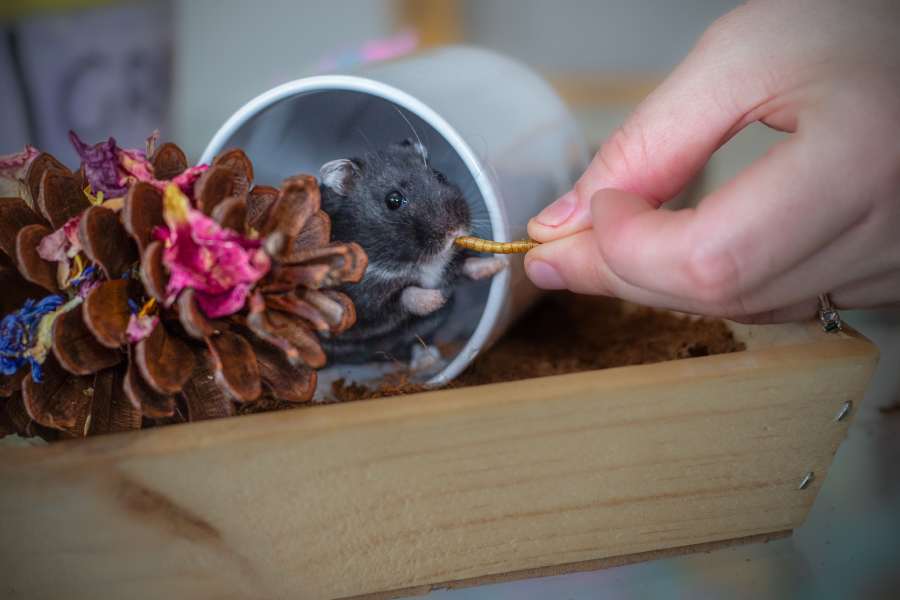
Professional photography Marique Photography
Did you know that hamsters are one of the most neglected pet species in the world? Holistic Hamster aims to change things for these adorable but deeply misunderstood creatures.
The founder’s story
Holistic Hamster began in Gqeberha, Eastern Cape, but its roots stretch back much further – into a childhood filled with animals, curiosity, and kindness. Its founder, Jenni (pronounced Yen-nie) Prinsloo, grew up deeply connected to the animal world. From feeding her father’s racing pigeons while wearing diapers to caring for her childhood dogs, animals were never just part of her life – they shaped it.
Born and raised in what was then known as Port Elizabeth, Jenni graduated with an engineering degree in 2021. But, despite the stability the field offered, something meaningful was missing.
The highlight of each day became two stray cats she found outside her first workplace. She ensured they were spayed, vaccinated, and provided with food and water – quietly starting her journey into welfare work. These two cats inspired her to begin a pet food pantry drive, supporting rescue organisations such as Cat Rescue PE, Cat Care PE, Save-A-Pet, AWS PE, SPCA Uitenhage, and Port Elizabeth Animal Rescue (PEAR).
Helping them brought Jenni a sense of fulfilment engineering never could.
Rescue and Volunteering
During an engineering job, Jenni rescued an abandoned Egyptian goose chick named Gladys, caring for her until she grew, learned to fly, and eventually started her own family. Their bond remains a cherished reminder of the trust animals can place in humans.
Jenni also volunteered extensively with animal welfare organisations: 77 hours at SANCCOB (caring for seabirds, preparing food, cleaning, and basic handling) and 42 hours at Save-A-Pet (grooming, walking, and enriching rescue dogs). These experiences deepened her commitment to animal welfare.
The Path to Holistic Hamster
The heart of Holistic Hamster began beating in April 2022, when Jenni rescued Buttercup, a beautiful blond Syrian hamster. Buttercup showed her how misunderstood hamsters truly are and how incorrect housing, diet, and enrichment can cause a lifetime of harm.
With guidance from Keri Rall (Keri’s Custom Cabins) and Hamster South Africa, Jenni learned proper care standards and discovered a passion for advocating for these tiny, vulnerable animals.
Her second Syrian rescue, Speckles, deepened this mission. He arrived with severe arch back, caused by running on an undersized wheel earlier in life – a common yet preventable condition. Though their time together was short, Jenni made sure his final months were spent in a safe, enriched, comfortable habitat he deserved.
Buttercup and Speckles became the foundation of Holistic Hamster – a space that prioritises education, welfare, and ethical care above all else. Over the years, Jenni has rescued more than 18 hamsters and helped rehome numerous hamsters from accidental pregnancies. Today, she shares her home with one hamster and four Guinea pigs – each receiving the holistic, species-appropriate care that inspired her business name.
Holistic Hamster is a small online store (www.holistichamster.co.za) that specialises in high-quality products primarily for hamsters, with a selection of items suitable for Guinea pigs and rats. The store focuses on safe, natural, and enriching products that support the well-being of small pets, including bedding, food, accessories, and habitat essentials.
Holistic Hamster is known for its beautiful paper bedding, natural décor, and enrichment items – all designed to promote healthy, happy, and active lives for small pets.
What You Need to Know About Proper Hamster Care
Holistic Hamster advocates research-backed welfare standards, helping owners create safe, enriching environments where hamsters can truly thrive.
-
Hamsters Are Not “Starter Pets”
Hamsters are often misunderstood as “easy” pets, but they require dedicated care, proper housing, and knowledgeable handling. They’re nocturnal, can only be handled for short periods, and may nip if stressed. For these reasons, many young children lose interest quickly. They’re particularly poorly suited to younger children.
Children under 10 may struggle to handle hamsters gently enough.
Children under five are more vulnerable to rodent-borne illnesses such as LCMV.
If you still choose to get a hamster for a child, adult supervision and full responsibility for care is essential. Families seeking a more child-friendly small pet may prefer a same-sex pairs of rats, which are social, interactive, and awake during the day.
-
Solitary Nature and Housing
In South Africa, all hamster species – including Syrians and hybrid dwarf hamsters – are strictly solitary and territorial. Once they reach adulthood, they must live alone to prevent severe stress, fighting, injuries, or death.
Hamsters reach sexual maturity very early – between four and six weeks – with males maturing slightly faster than females. By four weeks of age, males and females must be housed separately. Pet shops often house hamsters together and may misidentify age and gender, leading to accidental pregnancies and unwanted litters.
-
Habitat Size and Ventilation
All hamster species require a minimum of 5,000cm² unbroken floor space – 100cm × 50cm. (Bigger is always better!)
Hamsters are ground-dwelling burrowers with poor eyesight. This means:
- Shelves and platforms do NOT count towards floor space.
- Tall multi-level cages are unsafe.
- Large, open floor space allows for natural foraging and burrowing.
- Proper airflow is essential.
- The lid should be at least 80% mesh using strong wire mesh. Drilled holes – even hundreds or thousands – do not provide adequate ventilation and can cause respiratory issues.
-
Habitat Placement
Place the enclosure in a quiet, peaceful area of the home:
- Away from smoke.
- Away from loud music or noises.
- Out of direct sunlight.
- Away from draughts and open windows.
Ensure the habitat is secure and stable – the lid must be heavy and escape-proof (hamsters are little escape artists!).
5. Bedding Depth
- Use paper-based bedding ONLY (Holistic Hamster bedding and other local small businesses on HSA sell this).
- Bedding depth should be 25–30cm in at least one-third of the enclosure.
- Additional substrates and sandpits add enrichment and reduce bedding costs.
- NEVER USE: pine shavings, scented bedding, printed paper, straw, hay, fabric, or pellet bedding. These contain toxins and/or can cause breathing issues and even intestinal blockages, or can cut paws and skin.
6. Hamster Wheel Size
In the wild, hamsters run 5–9km per night. Captive hamsters can be equally active on their wheels. Providing a correctly sized, high-quality wheel is vital to prevent injuries to the spine, neck, hips, and feet. Make sure that the wheel is solid – no wire, mesh, rung, or crossbar wheels. The hamster should run straight on a flat surface, not curved or angled. Larger wheels are always better for safe and natural exercise.
Recommended wheel sizes:
- Dwarf hamsters: 21–30cm (8–12”)
- Syrians/Teddy Bears: 27–35cm (11–14”)
7. Enrichment: Keep the Habitat Busy
A well-stimulated hamster is a healthy and happy hamster. Don’t be afraid to clutter the habitat – the busier the space, the better for both mental and physical activity.
Key enrichment items include:
- Hideouts: cardboard boxes, cork logs, or small hide houses.
- Sand baths: use only safe sand, such as Kiddies Playsand.
- Digging opportunities: Coco Peat or Chipsi Snake substrates.
- Tunnels: simple toilet rolls work perfectly.
- Natural foraging/explore opportunities: forage mixes, treat tunnels, pine cones, driftwood, and grapevine.
Providing a variety of these items encourages natural behaviours, helps keep teeth and nails trimmed, and reduces boredom and stress. Most of these items are available for purchase at Holistic Hamster.
8. Nutrition
A hamster’s diet must include:
- Good quality dry food mix – provides essential nutrients and forms the base of their diet. Recommended brands include HSA Dwarf & Syrian Food Mixes, Bunny Nature Dwarf Hamster Dream Expert, and Oliver’s Burrow Hamster Mix.
- Fresh foods – a variety of vegetables, proteins, and fruits (only serve as a treat). A full list of safe and unsafe foods can be found on the Hamsters South Africa (HSA) website.
- Fresh water – always available and kept clean.
9. Responsible Ownership & Financial Readiness
Owning a hamster requires more than love – it requires planning and commitment. Responsible ownership includes:
- Financial readiness: Setting up a proper habitat costs approximately R1,500–R3,000, with monthly maintenance around R200–R350 (excluding veterinary care).
- Access to an exotic animal vet: Hamsters hide symptoms until illness is serious, so immediate veterinary care is essential.
- Lifelong commitment: Owners must be prepared to care for the hamster for its entire life (2-3 years), providing safe housing, proper nutrition, and enrichment.
10. Adoption Over Breeding
Never attempt to breed your hamsters. Breeding can cause serious harm to both parents and offspring and adds pressure on already overwhelmed rescue organisations.
Instead, consider adopting a hamster from a rescue. Some rescue organisations include Boggle & Brux (Cape Town), The 3R’s Rescue (South Coast, KZN), and Raven Claw (Pretoria East). If you live in an area without hamster rescues, you can post on the “Hamsters South Africa” Facebook group to request adoption. There are many contacts and community members who can help you find a hamster in need of a loving home.
Holistic Hamster’s Vision
At Holistic Hamster, their vision is rooted in compassion, education, and ethical care. They believe every small life deserves respect, safety, and the opportunity to thrive.
- Nurturing Small Lives: Providing safe, high-quality, welfare-approved products.
- Educating Owners & the Pet Community: Sharing accurate, updated information on proper exotic animal care.
- Supporting Small Ethical Businesses: Collaborating with like-minded businesses, such as Hamster South Africa (Tiny Pet Mall), and Mischief Pets, that prioritise safe products.
- Giving Back to Rescues: Donating to exotic animal rescues and supporting their work.
- Expanding Our Catalogue: Continuously adding new, enriched, and ethical products.
- Eco-Friendly Packaging: Taking small, meaningful steps towards sustainability with:
- Reused protective packaging.
- Kraft paper bags for sprays and pine cones.
- Less plastic, more planet-friendly materials.
Every small choice makes a difference.
To learn more about proper, updated hamster care, visit Hamster South Africa at https://www.hamsterssouthafrica.com/
“Every little life has value.”


