Written by Trevor Glover – Hyacinth Haven Bird Sanctuary
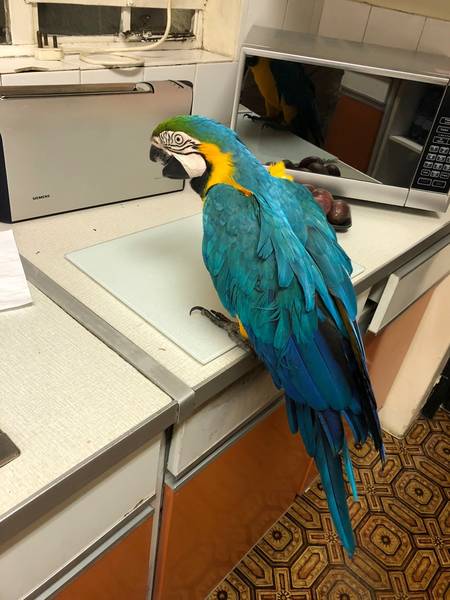
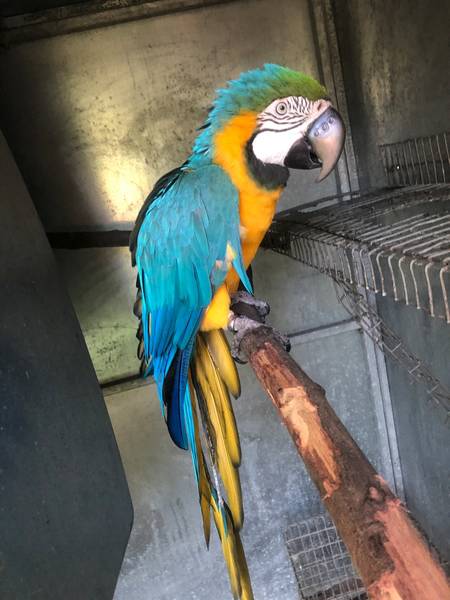
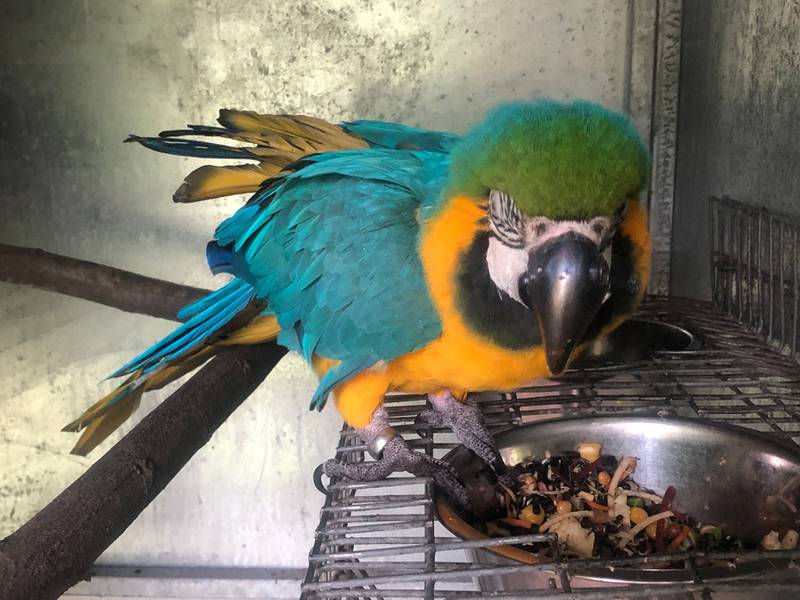
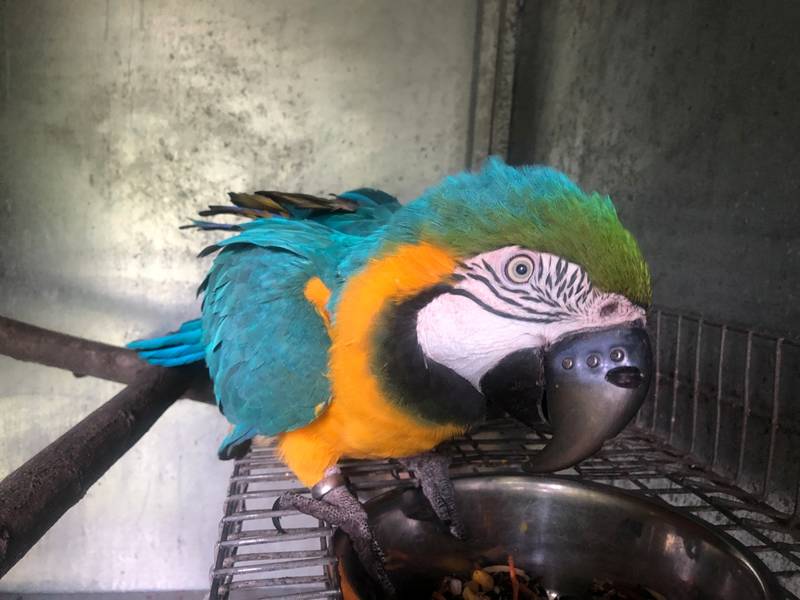
Max, a blue-and-gold macaw, was surrendered to Hyacinth Haven Bird Sanctuary in Plettenberg Bay on the 24th of August 2016.
Unfortunately, very limited information was available or provided. I was given to understand that the person who handed him in had rescued him overseas and brought him back to South Africa. He wasn’t sure of Max’s age, but had got him as an adult, which ties in with the aggressive behaviour, and had kept him for several years. I worked on the assumption that Max was 10 to 15 years old on arrival at Hyacinth Haven. Max was surrendered because his owner had got a job overseas and was unable to take him with him.
After blood tests and quarantine, Max was put into the main macaw aviary, which covers half an acre and is 12m high. The inside is filled with large, varied natural trees, and macaws of all sizes and types reside in the aviary.
Max wasn’t a friendly, cuddly type of parrot so, in theory, was perfect for this aviary. Unfortunately, he was aggressive towards the macaws, but I didn’t feel it was bad enough to have to remove him.
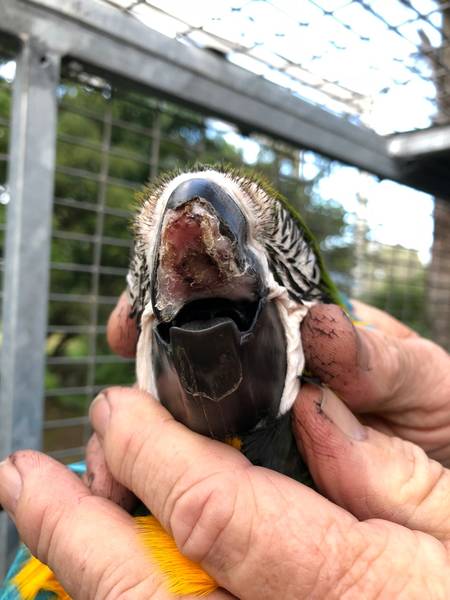
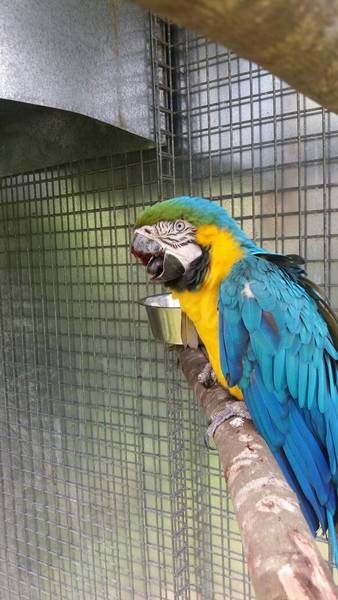
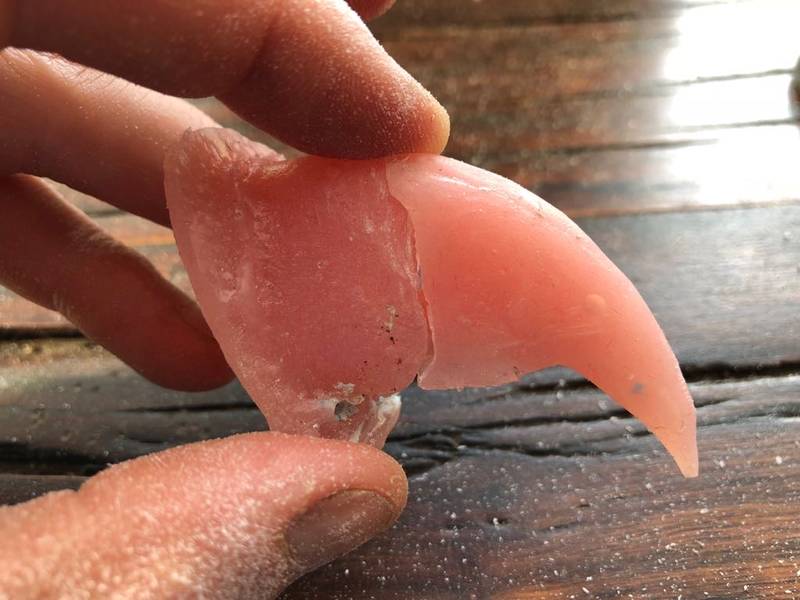
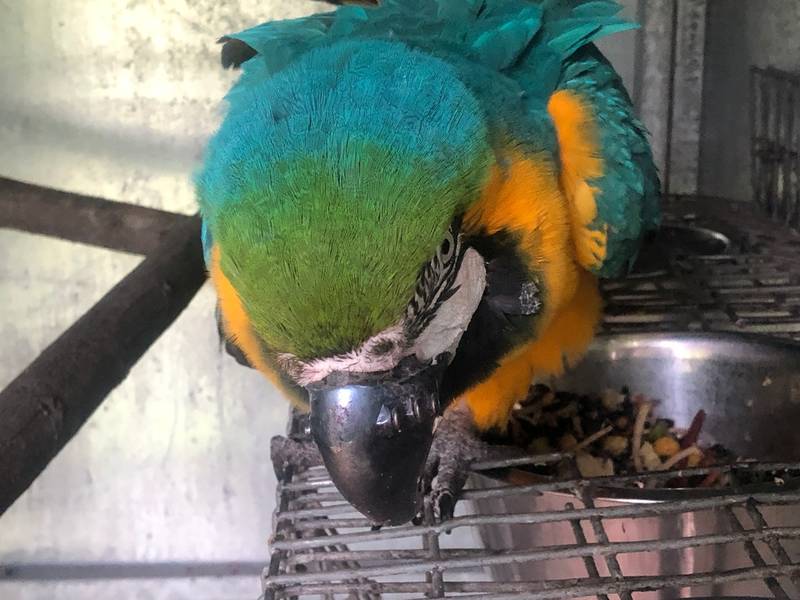
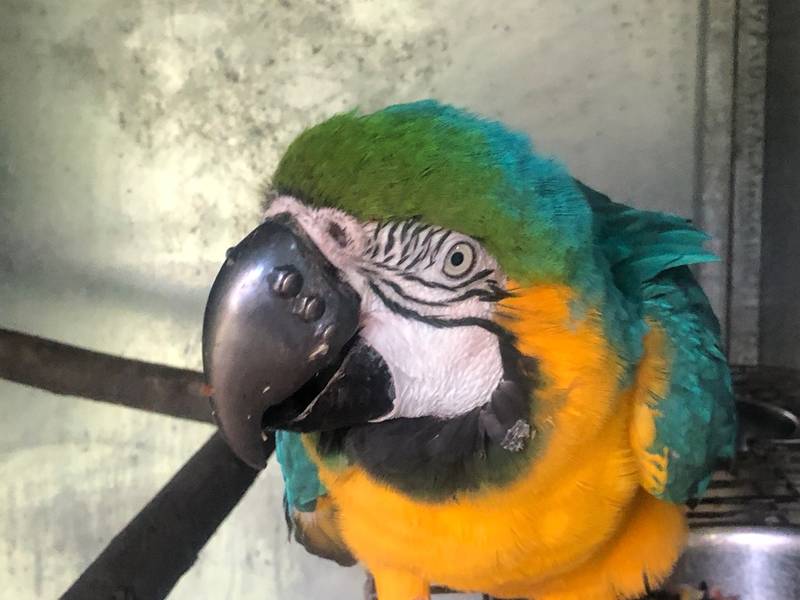
I was eventually proved wrong: at the end of 2017, during hormone season, Max was aggressive to one of the Hyacinth macaws. This macaw then bit Max’s top beak and cracked the left side from top to bottom. I immediately pulled Max out of the aviary and put him in a transition aviary along with another blue-and-gold macaw that also had an injured beak. We monitored them both throughout the day for two weeks and they showed no stress or signs of potential problems. However, during their third week together (the first week of February 2018), they became aggressive towards one another, which resulted in Max's weakened beak being ripped off completely.
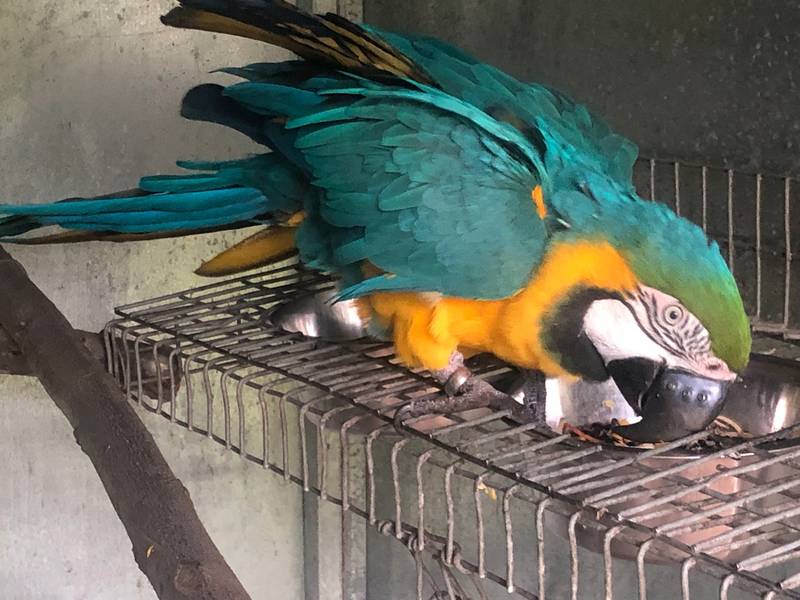
I rushed Max (and his broken beak) to Dr Brendan Tindall at the Robberg Vet Clinic for treatment and evaluation. Brendan kept him at the clinic and was, over the next few days, able to get Max to take in very soft food. On his return to the sanctuary, Max was put in an aviary on his own. I prepared a feeding regime that consisted of a hot soft food mix of about 10 different very nutritious foods, which he was fed twice a day. We also monitored his weight daily.
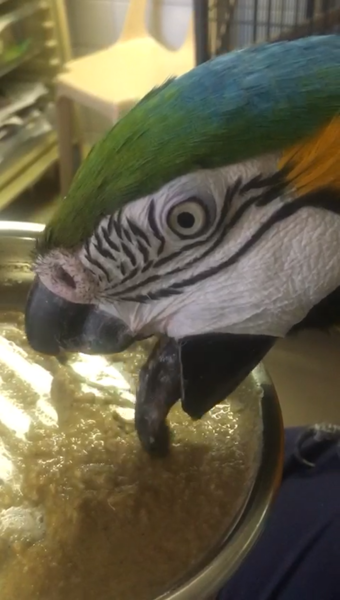
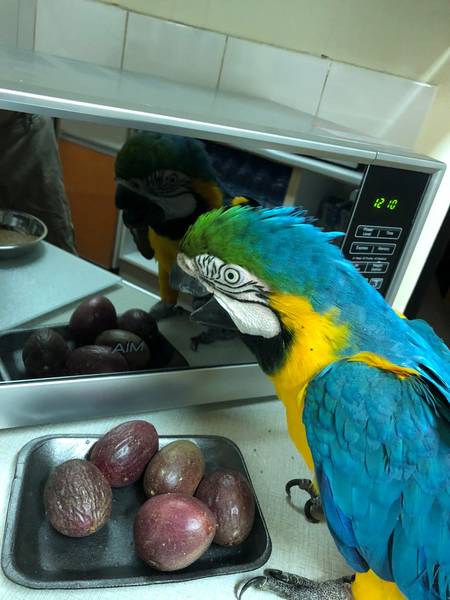
At first, Max was hand-fed but soon started lapping up the food with his tongue on his own. From then on, in addition to the soft food mix, he got a range of very finely chopped soft fruits along with almond sprinkles. As long as he could get to the food with his tongue, Max could eat on his own.
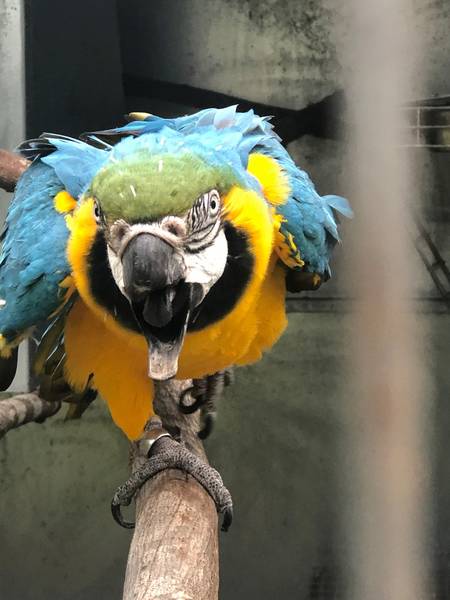
After a few months, we noticed that his bottom beak, with nothing to wear it down, continued growing out straight. Once longer than Max’s tongue, it prevented him from reaching any food to eat. Dr Tindall then started a routine cutting back of the bottom beak as needed.
SPECIALIST TREATMENT AND EXTRAORDINARY MEASURES
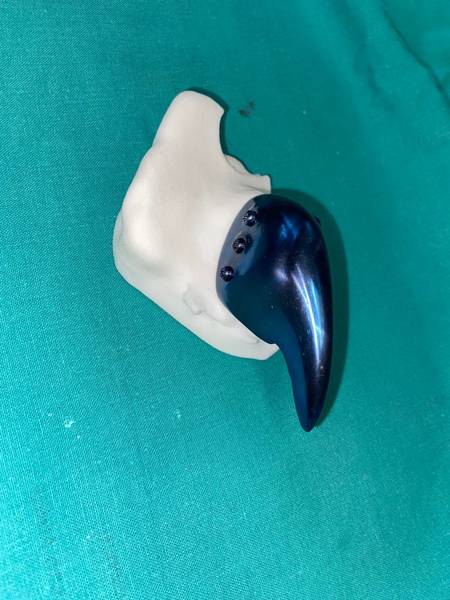
It was somewhere around this time that I started looking at the possibility of a prosthetic beak. Unfortunately, there was very little available information applicable to hookbills, specifically other than one odd-shaped beak that had been put on a macaw in Brazil. My research over many months eventually led me to contact, Dr Dorianne Elliot, whom I’ve always considered to be the leading avian vet in South Africa. Dr Elliot introduced me to Professor Gerhard Steenkamp, a veterinary specialist in dentistry and maxillofacial surgery at the Faculty of Veterinary Science at the University of Pretoria, and the whole project became feasible.
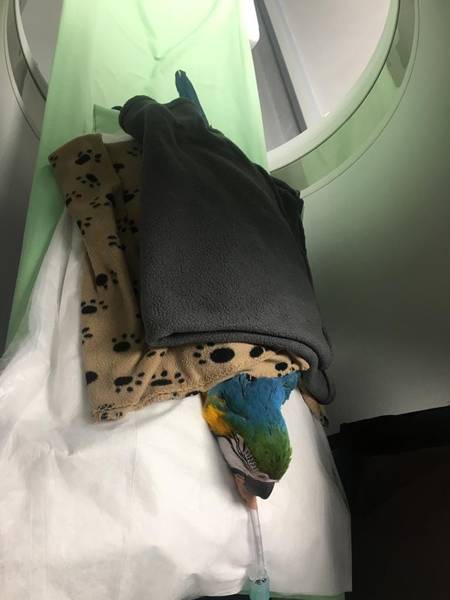
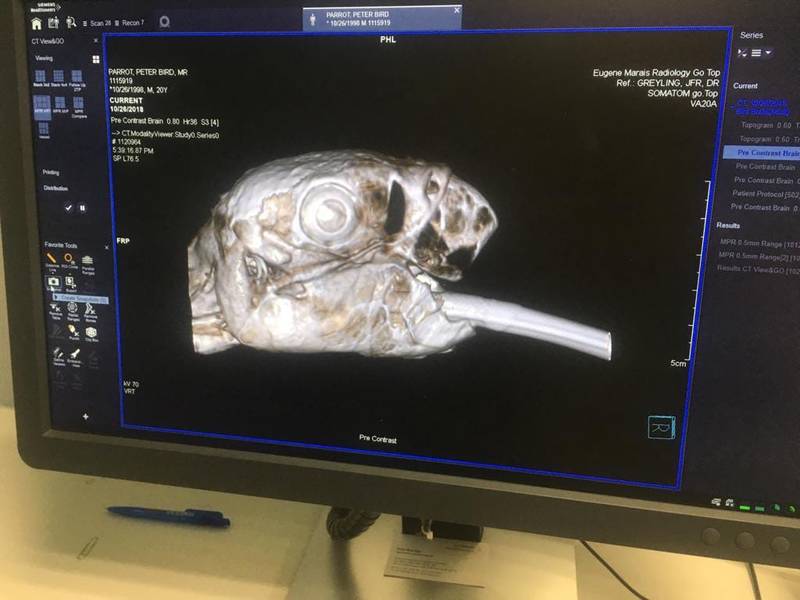
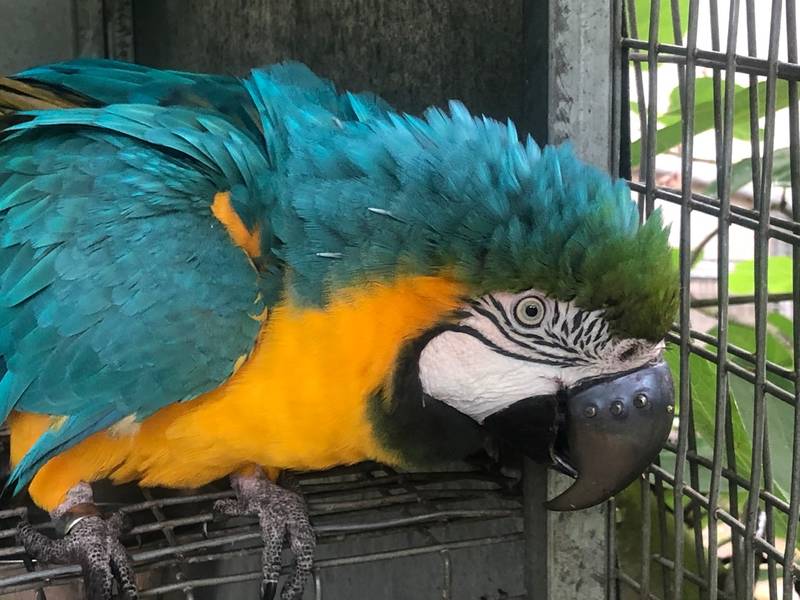
I took Max up to Onderstepoort for a CT scan to determine if there was enough remaining beak and bone to allow a prosthetic to be attached. The MRI indicated there was indeed sufficient beak and bone, and it was decided to proceed with preparations to get Max fitted with a 3D-printed titanium beak. Professor Steenkamp took impressions of the remaining beak to make sure that the prospective printed beak would fit onto the remaining stump. Both the impressions and CT scan were sent to Philip van der Walt of BunnyCorp, who proceeded to develop and draw the beak. Once the final drawings were received, the search began for someone to print the beak and make the particular screws.
Then the pandemic arrived, bringing everything to a standstill for almost two years.
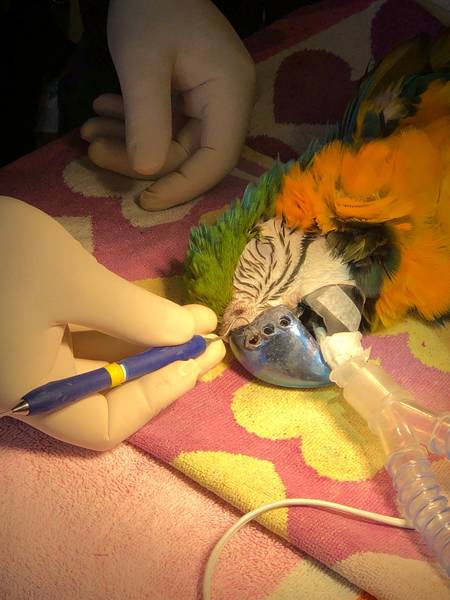
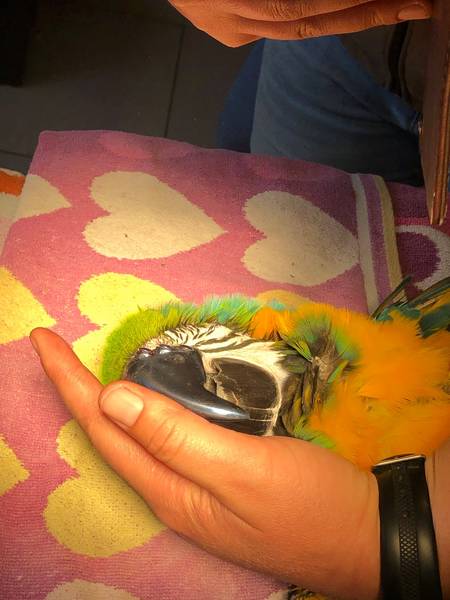
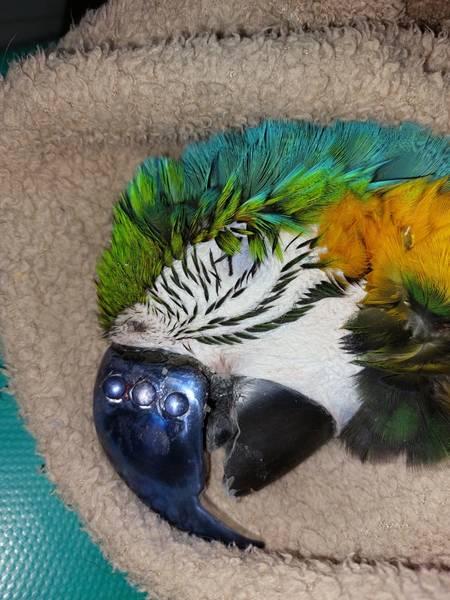
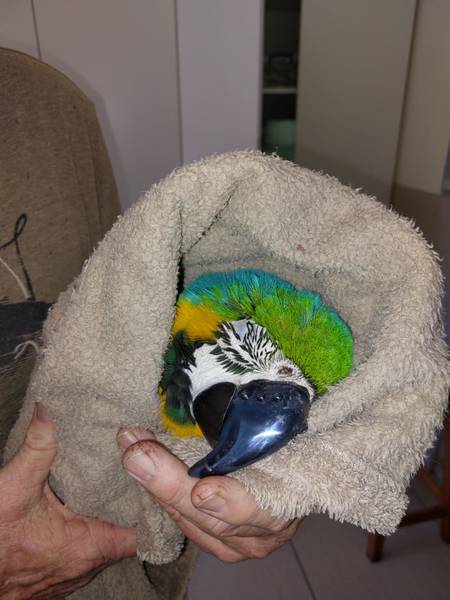
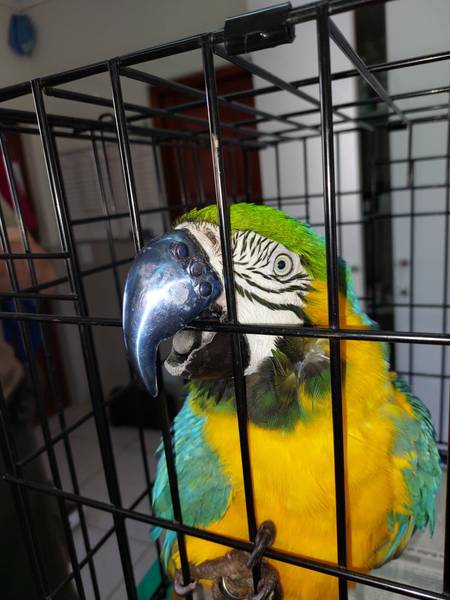
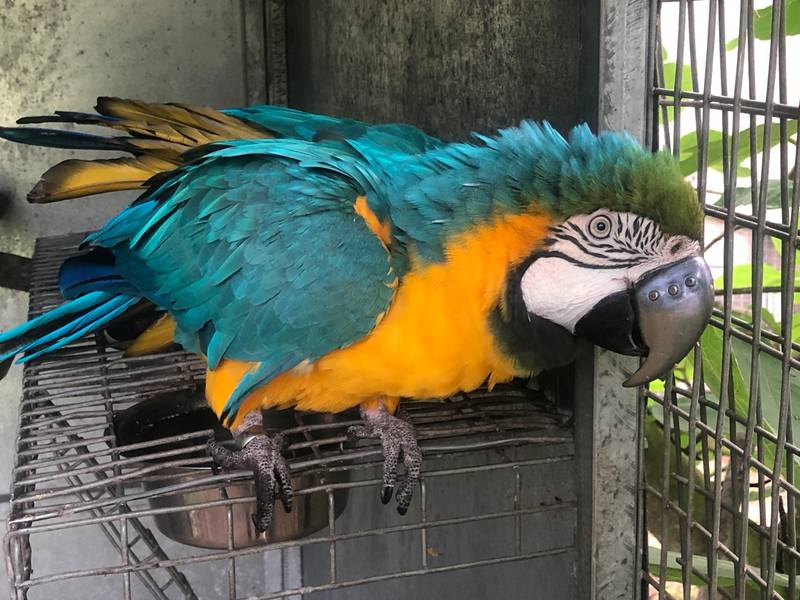
Finally, things got going again, and after redoing the moulds of the stump to determine if it had changed at all, Professor Steenkamp gave the go-ahead for the operation to attach Max’s new beak. This was successfully done on the 12th of October 2021, on my birthday, and one of the best presents I have ever received.
Within a day, Max was eating solid pieces of food without a problem – a remarkable change from eating soft food only for years.
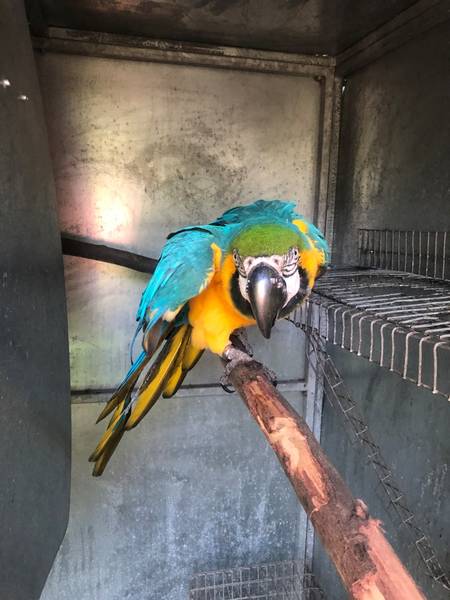
A special large flight aviary, inside the main macaw aviary, has been built for Max where he’ll be safe but can still interact verbally and visually with the other macaws.
ABOUT HYACINTH HAVEN
Trevor Glover initially built a half-acre retirement home aviary for his hyacinths. However, word soon spread, and he was inundated with requests to help others, and so Hyacinth Haven Bird Sanctuary was born. As the need to house more birds arose, more aviaries were (and continue to be) built. The aviaries are all large and naturally planted to give the birds as natural a life as possible. Any bird that’s taken into the sanctuary is there for the duration of its life and the birds aren’t sold, rehomed, fostered out or bred with, but are cared for by Trevor. Hyacinth Haven isn’t open to the public and is funded solely by Trevor.